
When Is It Time to Replace Your Vehicle’s Battery?
Most vehicle batteries need replacement every three to five years, though signs like slow engine cranking, dim headlights, a swollen battery case, or a dashboard warning light can signal it’s time sooner. If you notice these symptoms, Accuracy Automotive recommends getting your battery tested right away to avoid an unexpected breakdown.
Few things disrupt a morning faster than turning the key and hearing nothing but a slow, defeated click. A dead battery rarely announces itself with perfect timing, which is why understanding the warning signs ahead of time can save you from being stranded in a parking lot or, worse, on the side of a highway. Vehicle batteries don’t fail overnight; they weaken gradually, giving off clues that many drivers miss until it’s too late.
At Accuracy Automotive, we see this scenario play out often. A customer comes in convinced their alternator or starter is the problem, only to discover the real culprit was a battery that had been quietly deteriorating for months. Knowing how to replace your vehicle’s battery before it leaves you stuck is one of the simplest ways to protect your car and your schedule.
This guide walks through the signs that indicate your battery is on its way out, what causes batteries to wear down faster than expected, and how Accuracy Automotive can help you handle the replacement with minimal hassle.
How long does a car battery typically last?
Most car batteries last between three and five years under normal conditions, according to data from the Battery Council International. That range shifts depending on climate, driving habits, and the quality of the battery itself. Drivers in hot climates, for example, tend to see shorter battery lifespans because heat accelerates the chemical reactions inside the battery that cause it to degrade. Cold weather isn’t much kinder, since low temperatures reduce a battery’s ability to hold a charge and make it work harder to start the engine.
Short trips are another factor that wears batteries down faster than expected. A battery relies on longer drives to fully recharge after the surge of power needed to start the engine. If your daily routine consists mostly of quick errands, your battery may never get the chance to reach a full charge, which shortens its usable life considerably.
Once a battery crosses the three-year mark, it’s worth paying closer attention to how your vehicle starts and performs. Age alone doesn’t guarantee failure, but it does increase the odds significantly enough that proactive testing becomes a smart habit.
What are the warning signs that your battery needs to be replaced?
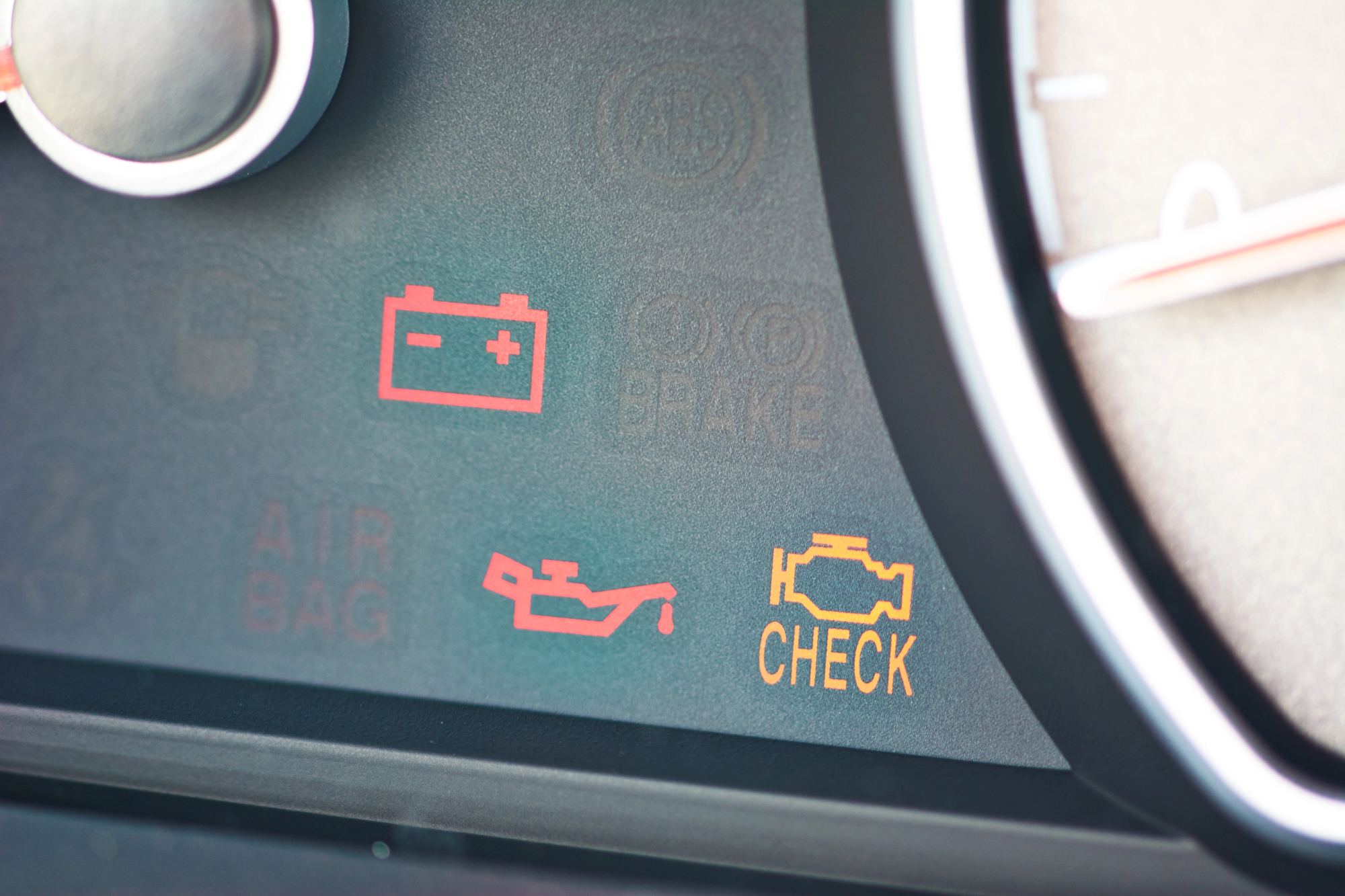
check engine light
A battery rarely fails without warning. Slow engine cranking is often the first sign something is wrong. If your engine takes a beat longer than usual to start, or makes a sluggish, labored sound before catching, the battery is likely struggling to deliver enough power. Dim headlights or interior lights are another common indicator, since a weakening battery can’t maintain full voltage to electrical components.
The check engine light or a dedicated battery warning light on your dashboard can also point to trouble. While these lights sometimes indicate unrelated issues, they’re worth investigating quickly rather than dismissing. A swollen, bloated, or misshapen battery case is a more visible red flag, often caused by excessive heat or overcharging, and it typically means the battery needs to be replaced immediately rather than monitored further.
A corroded terminal is another clue. That chalky, white or bluish buildup around the battery posts can interfere with the connection between the battery and your vehicle’s electrical system, mimicking the symptoms of a dying battery even when the battery itself still has some life left. Cleaning corrosion can sometimes buy time, but if it keeps returning, it’s usually a sign of a deeper issue worth having inspected.
A rotten egg smell coming from under the hood deserves immediate attention. This odor usually signals a leaking battery, which can release corrosive and potentially hazardous materials. If you ever notice this smell, it’s best to have your vehicle looked at right away rather than waiting for a scheduled appointment.
What causes a car battery to wear out faster than normal?
Several everyday habits can shorten a battery’s lifespan without drivers realizing it. Leaving headlights, interior lights, or accessories running while the engine is off drains the battery and forces it to work harder to recover. Frequent short trips, as mentioned earlier, prevent the battery from fully recharging, creating a cycle of incomplete charges that wears it down over time.
Extreme temperatures, whether scorching summers or freezing winters, place additional strain on battery components. Loose or corroded connections can also cause a battery to appear weaker than it actually is, since a poor connection prevents it from delivering consistent power even if the battery itself is healthy.
An aging alternator can compound the problem. If the alternator isn’t properly recharging the battery while you drive, the battery will drain faster and show signs of failure well before its expected lifespan ends. This is one of the reasons a thorough inspection matters more than simply swapping in a new battery and hoping the issue resolves itself.
Why should you get your battery tested instead of guessing?

car battery jump
Guessing whether a battery needs replacing can lead to either premature replacement or, more dangerously, ignoring a battery that’s about to fail. A proper battery test measures the actual health and charging capacity of the battery, giving a clear answer instead of an assumption.
Accuracy Automotive uses diagnostic equipment to test battery voltage, cold cranking amps, and overall charging system performance. This approach identifies whether the battery itself is the problem or whether an underlying issue, like a failing alternator or a parasitic electrical drain, is draining it prematurely. Testing first saves money by avoiding unnecessary replacements and prevents the frustration of installing a new battery only to have the same symptoms return days later.
How does Accuracy Automotive handle battery replacement?
When a battery does need replacing, Accuracy Automotive makes the process straightforward. Technicians start by confirming the diagnosis through testing, then recommend a battery that matches your vehicle’s specific power requirements rather than a generic, one-size-fits-all option. Choosing the correct battery matters because factors like cold cranking amps and group size vary by vehicle, and an improperly matched battery can lead to poor performance or premature failure.
Once the right battery is selected, the replacement itself is typically quick, often completed within the same visit. Accuracy Automotive also checks the charging system, inspects terminals and cables for corrosion or wear, and ensures everything is properly connected before you leave. This full-system check helps catch related issues early, rather than leaving customers to discover a second problem a few weeks later.
Protect your vehicle before a dead battery catches you off guard
A failing battery sends signals long before it leaves you stranded, but those signals are easy to overlook if you’re not paying attention. Slow starts, dim lights, corrosion, or a strange odor under the hood are all worth taking seriously rather than brushing off until the next scheduled service.
If your vehicle has been showing any of these symptoms, or if it’s simply been three or more years since your last battery replacement, scheduling a test is the smartest next step. Accuracy Automotive can assess your battery’s health, explain exactly what’s happening under the hood, and handle the replacement efficiently if it’s needed. Reach out to Accuracy Automotive today to get your battery tested and drive with confidence instead of uncertainty. Reach out by calling (801) 467-7455.