5 Warning Signs Your Timing Belt Needs Replacement
Your car’s timing belt plays a crucial role in keeping your engine running smoothly, yet it’s one of the most overlooked components until something goes wrong. This essential part synchronizes the rotation of your engine’s crankshaft and camshaft, ensuring that your engine’s valves open and close at precisely the right moments during each cylinder’s intake and exhaust strokes.
When a timing belt fails, the consequences can be catastrophic and expensive. Understanding the warning signs that indicate your timing belt needs replacement can save you thousands of dollars in engine repairs and prevent you from being stranded on the side of the road. The automotive experts at Accuracy Automotive have seen countless cases where early detection of timing belt issues could have prevented major engine damage.
Most timing belts are designed to last between 60,000 to 100,000 miles, depending on your vehicle’s make and model. However, various factors including driving conditions, maintenance history, and manufacturing quality can affect this lifespan. Recognizing the early warning signs and taking proactive action is essential for maintaining your vehicle’s reliability and protecting your investment.
Unusual Noises From Your Engine Bay
One of the first and most common indicators that your timing belt may be failing is the presence of unusual sounds coming from your engine compartment. As the timing belt begins to wear down, it can produce a variety of distinctive noises that should never be ignored.
A high-pitched squealing sound often indicates that the timing belt has become loose or is beginning to slip on the pulleys. This squealing typically becomes more pronounced when you first start your engine or when you accelerate. The sound occurs because the worn belt can no longer maintain proper tension and grip on the smooth pulley surfaces.
You might also hear a slapping or flapping noise, which suggests that the timing belt has stretched beyond its normal parameters or that some of the belt’s teeth have been damaged or worn away. This sound is particularly concerning because it indicates that the belt is no longer maintaining proper synchronization between the engine components.
The technicians at Accuracy Automotive emphasize that any unusual noise from the engine bay should be investigated immediately. These sounds often serve as your first warning that timing belt replacement is becoming necessary, and addressing the issue promptly can prevent more serious problems from developing.
Visible Wear and Damage on the Belt
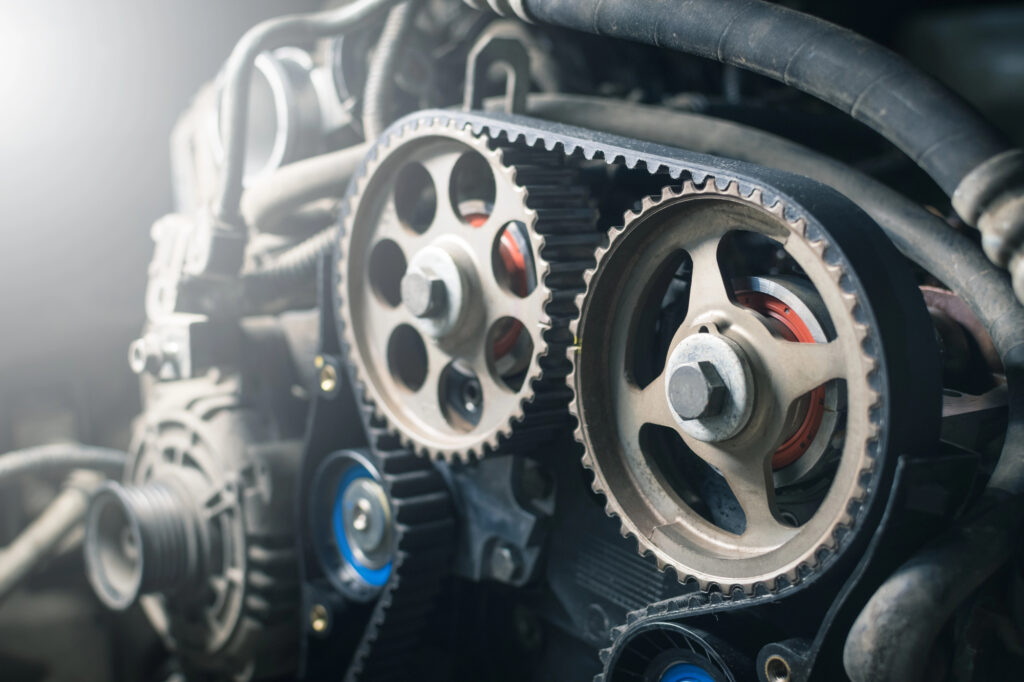
timing belt
Regular visual inspection of your timing belt can reveal important clues about its condition and remaining lifespan. While accessing the timing belt requires removing certain engine covers and components, periodic checks during routine maintenance can help identify problems before they become critical.
Cracking along the belt’s surface is one of the most obvious signs of deterioration. These cracks typically appear as small hairline fractures that run perpendicular to the belt’s length. As the rubber compound ages and is exposed to heat cycles, it becomes brittle and prone to cracking. What starts as minor surface cracks can quickly develop into complete belt failure if left unaddressed.
Fraying or worn edges on the timing belt indicate that the belt is not properly aligned with the pulleys or that the pulleys themselves may be damaged. This type of wear pattern suggests that the belt is experiencing excessive friction and stress, which will ultimately lead to premature failure.
Missing or damaged teeth on the belt represent a serious condition that requires immediate attention. The teeth on a timing belt are precisely engineered to mesh with the corresponding grooves in the pulleys, and any damage to these teeth can cause the belt to slip or jump timing. Accuracy Automotive’s experienced mechanics have seen cases where even a few missing teeth have resulted in significant engine damage due to improper valve timing.
Engine Misfiring and Performance Issues
When your timing belt begins to fail, it can cause noticeable changes in your engine’s performance that affect your daily driving experience. These performance issues occur because the belt can no longer maintain precise timing between the crankshaft and camshaft, disrupting the carefully orchestrated sequence of engine operations.
Engine misfiring is one of the most common symptoms of timing belt problems. You may notice that your engine runs roughly, especially at idle, or that it seems to stumble during acceleration. This occurs because the valves are not opening and closing at the correct times relative to the piston movements, resulting in incomplete combustion or mistimed fuel delivery.
Reduced power output is another telltale sign that your timing belt may be slipping or wearing out. Your vehicle may feel sluggish during acceleration, struggle to maintain speed on hills, or generally lack the responsiveness you’re accustomed to. This happens because the engine cannot operate at peak efficiency when the timing is even slightly off.
Metal Shavings in the Oil
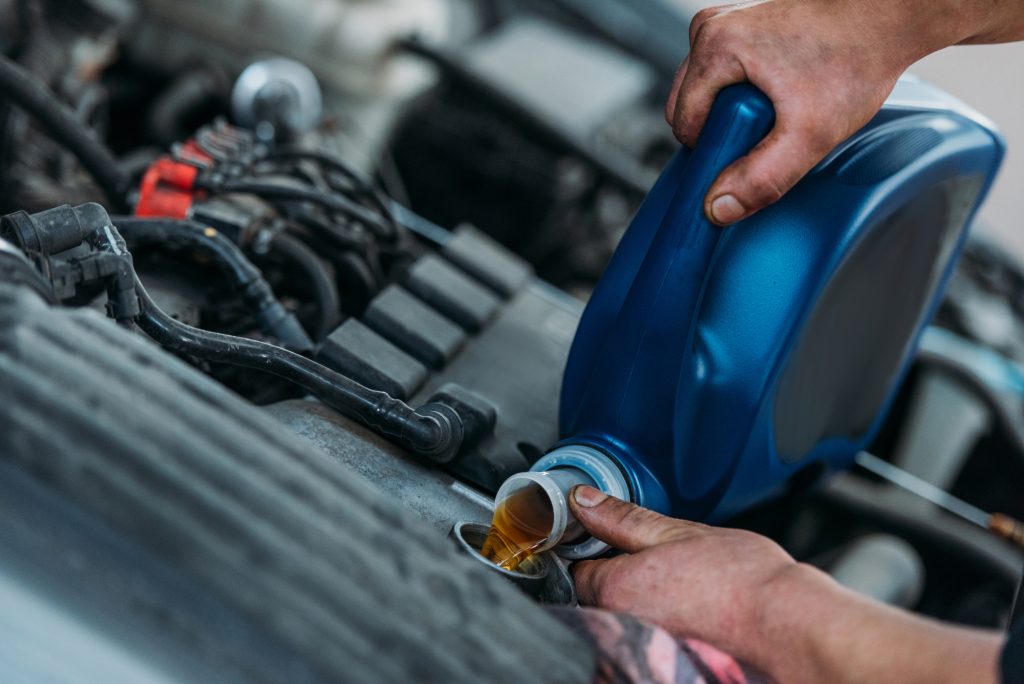
oil change
The presence of metal particles or shavings in your engine oil can be an alarming indication that your timing belt is causing secondary damage to other engine components. While this sign is less direct than some others, it often points to serious internal problems that may be related to timing belt failure.
During routine oil changes, experienced technicians like those at Accuracy Automotive carefully examine the used oil and filter for signs of metal contamination. Fine metal particles that appear silvery or glittery in the oil often indicate that internal engine components are experiencing abnormal wear or contact.
If metal shavings are discovered during an oil change, it’s crucial to have your timing belt and related components inspected immediately. This type of contamination suggests that significant damage may already be occurring within your engine, and delaying timing belt replacement could result in catastrophic and expensive engine failure.
Coolant or Oil Leaks Near the Timing Belt
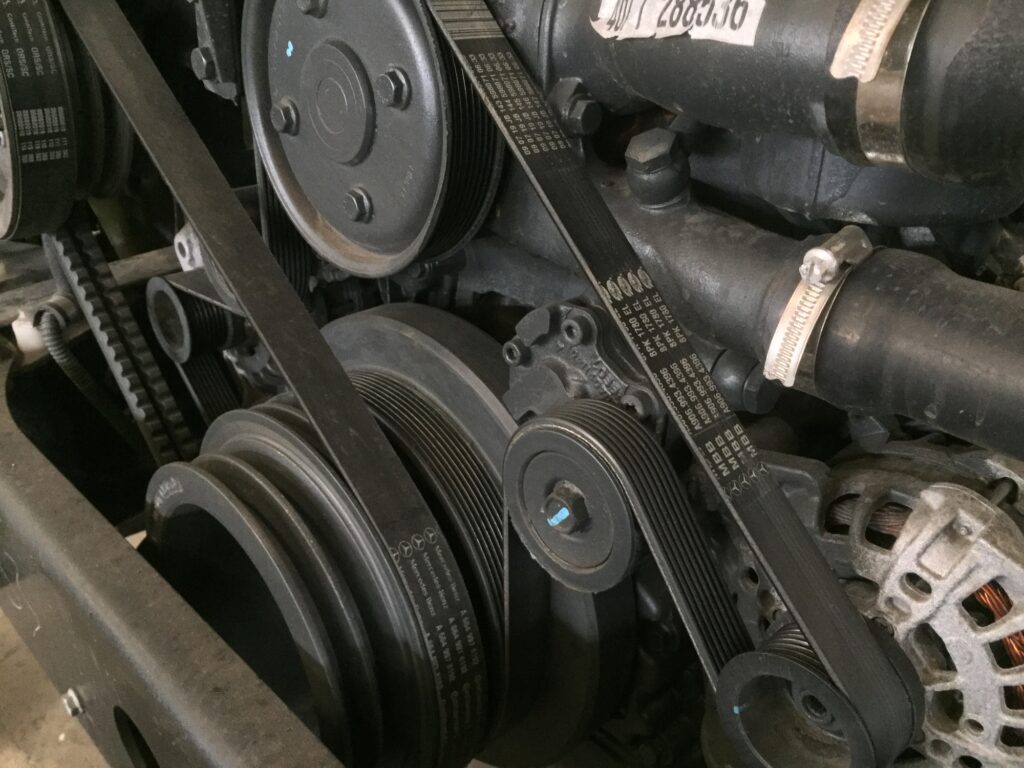
Timing Belt
Fluid leaks in the vicinity of your timing belt can create serious problems and serve as warning signs that replacement may be necessary. The timing belt area of your engine is home to several seals and gaskets that can develop leaks over time, and these leaks can accelerate timing belt deterioration.
Coolant leaks from the water pump, which is often driven by the timing belt, can cause the belt to become saturated with antifreeze. This contamination can cause the rubber belt material to swell, soften, or become brittle, significantly reducing its lifespan and reliability. When coolant comes into contact with the timing belt, it can also cause the belt to slip on the pulleys, disrupting engine timing.
Oil leaks from the crankshaft seal, camshaft seals, or other nearby gaskets can be equally problematic for timing belt health. Oil contamination can cause the belt material to deteriorate rapidly and can create a slippery surface that prevents proper grip between the belt and pulleys. This can lead to timing belt slippage and eventual failure.
Taking Action to Protect Your Engine
Recognizing these warning signs and taking prompt action is essential for preventing costly engine damage and ensuring your vehicle’s continued reliability. When you notice any combination of these symptoms, it’s important to have your timing belt system inspected by qualified professionals who can assess the condition of all related components.
The team at Accuracy Automotive understands that timing belt replacement represents a significant maintenance expense, but they also know that the cost of prevention is far less than the cost of major engine repairs. Their experienced technicians can provide a thorough evaluation of your timing belt system and recommend the appropriate course of action based on your vehicle’s specific needs and condition.
Don’t wait until your timing belt fails completely. By staying alert to these warning signs and working with trusted automotive professionals, you can protect your engine investment and maintain your vehicle’s performance for years to come. Reach out by calling (801) 273-0664 today!